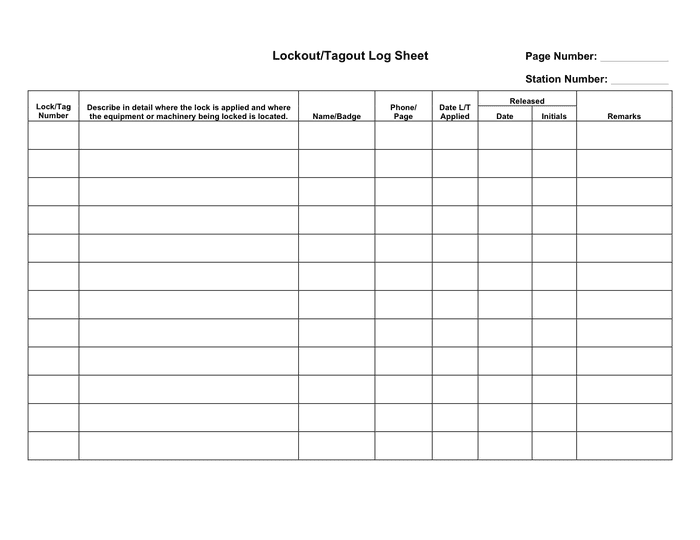
Equipment maintenance is one of the highest-risk activities in industrial environments. A split-second lapse—failing to confirm that a machine is de-energized—can lead to catastrophic injury or death. That's where lock out tag out log sheets enter the picture. They aren’t just paperwork; they’re a critical component of a structured safety protocol designed to prevent accidental energization during servicing.
The federal OSHA standard 29 CFR 1910.147 mandates the use of energy control procedures, including documentation like log sheets, to protect workers. Yet, in too many facilities, log sheets are treated as an afterthought—filled out late, inaccurately, or not at all. That’s not just a compliance failure; it's a direct threat to worker safety.
A properly used lock out tag out log sheet creates a transparent, traceable record of who locked what, when, and why. It turns an individual safety action into an accountable team process.
What Is a Lock Out Tag Out Log Sheet?
A lock out tag out log sheet is a formal document used to record the application and removal of lockout/tagout devices during maintenance or servicing of machinery. Unlike the lockout device itself—which physically prevents energy release—the log sheet provides the administrative backbone of the system.
It typically includes: - Date and time of lock application - Equipment name or ID - Name and employee ID of the person applying the lock - Type of energy source isolated (electrical, hydraulic, pneumatic, etc.) - Purpose of the lockout (e.g., motor replacement, belt adjustment) - Verification method used to confirm zero energy - Time and signature upon lock removal
These sheets may be paper-based or digital, but the core function remains the same: creating a real-time audit trail.
Example in Practice: At a food processing plant, three technicians prepare to replace a conveyor drive motor. Each applies their personal lock. The lead technician fills out the LOTO log sheet, listing all three names, the equipment ID, and the work scope. A supervisor verifies the log before work begins. After completion, each technician signs off as they remove their lock. This log is archived for 90 days.
Without this record, a night-shift operator might unknowingly restart the line, assuming no work is in progress.
Why Log Sheets Are Non-Negotiable
Log sheets aren’t bureaucratic overhead—they’re legal and operational safeguards.
1. Compliance with OSHA OSHA does not explicitly require a log sheet in every scenario, but it does require documented procedures, employee training records, and periodic inspections. A log sheet fulfills multiple compliance needs at once. During an audit, a facility without logs is effectively defenseless.
2. Accountability When only one person locks out a machine, responsibility is clear. But in group maintenance—common in plants—a log sheet ensures no one is left guessing who’s still working. It prevents premature re-energization, which causes 5–10% of all LOTO-related accidents.

3. Incident Investigation After a near-miss or injury, investigators need to reconstruct events. A complete log sheet can confirm whether procedures were followed, or expose gaps in training or enforcement.
4. Shift Handover Clarity In 24/7 operations, maintenance often spans shifts. A log sheet acts as a communication tool. The night crew can see exactly what was locked out, by whom, and for what purpose—no assumptions needed.
Common Mistakes That Undermine LOTO Logs
Even when log sheets exist, poor practices render them useless.
Mistake 1: Filling Out Logs After the Fact Some workers complete the log at the end of a shift, not during lockout. This creates memory gaps and risks omission. A technician might forget a secondary energy source or misrecord start times.
Fix: Make log completion a mandatory step before work begins—like signing a permit.
Mistake 2: Vague Equipment Descriptions Writing “conveyor” instead of “Conveyor Line 3B – Infeed Section” invites confusion. Multiple conveyors may be down. Specificity prevents errors.
Fix: Use standardized naming conventions and include asset IDs.
Mistake 3: Missing Verification Details A log that says “verified zero energy” without describing how (e.g., “tested with multimeter at terminal block”) lacks credibility.
Fix: Require technicians to note the verification method.
Mistake 4: Allowing Unsigned Entries Signatures are proof of personal responsibility. An unsigned log is legally weak and culturally permissive.
Fix: No signature, no work permitted.
How to Design an Effective LOTO Log Sheet
A good log sheet is simple but comprehensive. It should be easy to complete under pressure, yet thorough enough to hold up in an audit.
Key Elements to Include: - Header: Facility name, department, and log sheet number - Equipment ID and location (with diagram reference if possible) - Date, start time, and estimated completion - Technician name, ID, and signature (one row per person) - Energy types isolated (checklist format ideal) - Lock and tag IDs (if tracked) - Verification method used - Supervisor approval signature - Removal time and signature for each technician
Digital vs. Paper Logs: While paper logs are still common, digital systems are gaining traction. Tablets or kiosks at equipment bays allow real-time logging, photo uploads, and instant alerts. They also auto-archive and reduce illegible handwriting issues.
But digital isn’t always better. In wet, dusty, or explosive environments, paper may be more reliable. The key is consistency, not format.
When Group Lockout Requires Enhanced Logging
Group lockout procedures—where multiple workers service one machine—demand more rigorous documentation.
OSHA requires each employee to apply their own lock. But coordination is essential. Here, the log sheet becomes a central control point.
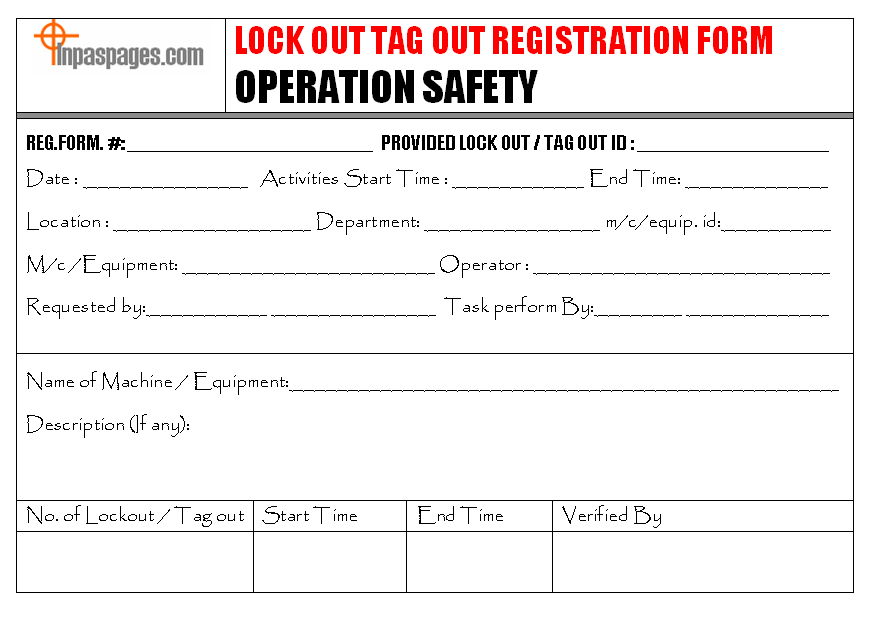
Best Practices for Group Lockout: - Appoint a Lead Authorized Employee responsible for overall coordination - All workers sign the log upon applying and removing locks - The lead verifies zero energy after all locks are applied - The log stays at the isolation point, visible to all - No lock is removed until the work is complete and all workers have exited
Real-World Scenario: At a paper mill, a team of four performs annual gearbox maintenance. The lead logs all four names, equipment ID, and work scope. Each technician applies a lock and signs. The lead tests for zero energy using a voltage detector and pressure gauge. After completion, each signs off upon removal. The log is filed and reviewed in the next safety meeting.
Without this process, a junior technician might remove their lock early, assuming work is done—while others are still inside the guard.
Integrating LOTO Logs into Safety Culture
A log sheet is only as strong as the culture behind it. In top-performing facilities, LOTO documentation is treated with the same seriousness as fire drills or PPE compliance.
Workplace Tips: - Conduct monthly log audits—check for completeness, accuracy, and timeliness - Use incomplete logs as coaching opportunities, not punishment - Display anonymized examples of good and bad logs in break rooms - Train new hires with real log sheets from past jobs - Tie log discipline to safety performance metrics
Supervisors must model the behavior. If a manager skips the log, workers will too.
Top 5 LOTO Log Sheet Solutions
Facilities can choose from pre-designed templates, software platforms, or custom systems. Here are five practical options:
| Solution | Format | Key Features | Best For |
|---|---|---|---|
| EHS Insight | Digital Platform | Real-time logging, mobile access, audit trails, integration with LOTO procedures | Large manufacturers with IT infrastructure |
| Creative Safety Supply Templates | Printable PDF | Free, OSHA-aligned, basic fields, easy to customize | Small to mid-sized shops on a budget |
| Seton LOTO Log Books | Physical Binder | Pre-numbered pages, carbon copies, tamper-resistant | High-risk environments with limited tech access |
| Lockout Tagout.biz Forms | Downloadable Templates | Industry-specific (electrical, HVAC, etc.), bilingual options | Multi-trade facilities |
| SafetyChain Software | Cloud-Based | Automated reminders, digital signatures, reporting dashboards | Food, pharma, or regulated industries |
Choose based on your workflow—not popularity. A paper log used consistently beats a fancy system that gathers digital dust.
Making LOTO Logs Actionable, Not Administrative
The best log sheets don’t just record history—they prevent future incidents. Integrate them into daily routines:
- Pre-Job Briefings: Review the log with all involved workers before locks go on.
- Audits: Randomly pull 10 logs per month and verify against work orders.
- Training: Use old logs as case studies—ask trainees to spot errors.
- Continuous Improvement: If the same mistake appears (e.g., missing verification), update training or the form itself.
A log sheet should feel like a natural part of the job, not a paperwork hurdle.
Lock out tag out log sheets are more than compliance tools—they are frontline defenses against preventable injuries. A well-maintained log saves lives by making safety visible, traceable, and accountable. Whether paper or digital, simple or advanced, the right log sheet used correctly turns procedure into protection. Implement one today, audit it weekly, and make it non-negotiable.
FAQ
What should you look for in Lock Out Tag Out Log Sheets: Why They Matter and How to Use Them? Focus on relevance, practical value, and how well the solution matches real user intent.
Is Lock Out Tag Out Log Sheets: Why
They Matter and How to Use Them suitable for beginners? That depends on the workflow, but a clear step-by-step approach usually makes it easier to start.
How do you compare options around Lock Out Tag Out Log Sheets: Why They Matter and How to Use Them? Compare features, trust signals, limitations, pricing, and ease of implementation.
What mistakes should you avoid? Avoid generic choices, weak validation, and decisions based only on marketing claims.
What is the next best step? Shortlist the most relevant options, validate them quickly, and refine from real-world results.